


Thermal Blocks in Karachi: The Polystyrene Insulated Building Block Explained
Karachi’s construction industry is slowly moving away from plain concrete blockwork toward materials that do more than just hold a wall up. Thermal blocks are one of the clearest examples of this shift. A thermal block is a concrete building block with a layer of Expandable Polystyrene sandwiched and integrally locked inside it, so the wall gets structural strength and insulation from a single unit instead of two separate steps. For a city where cooling costs are one of the biggest ongoing expenses for homeowners, factories, and commercial buildings alike, that combination matters.
This guide explains what a thermal block actually is, how it is built, and why it is becoming a practical choice for construction in Karachi’s climate.
What Are Thermal Blocks?
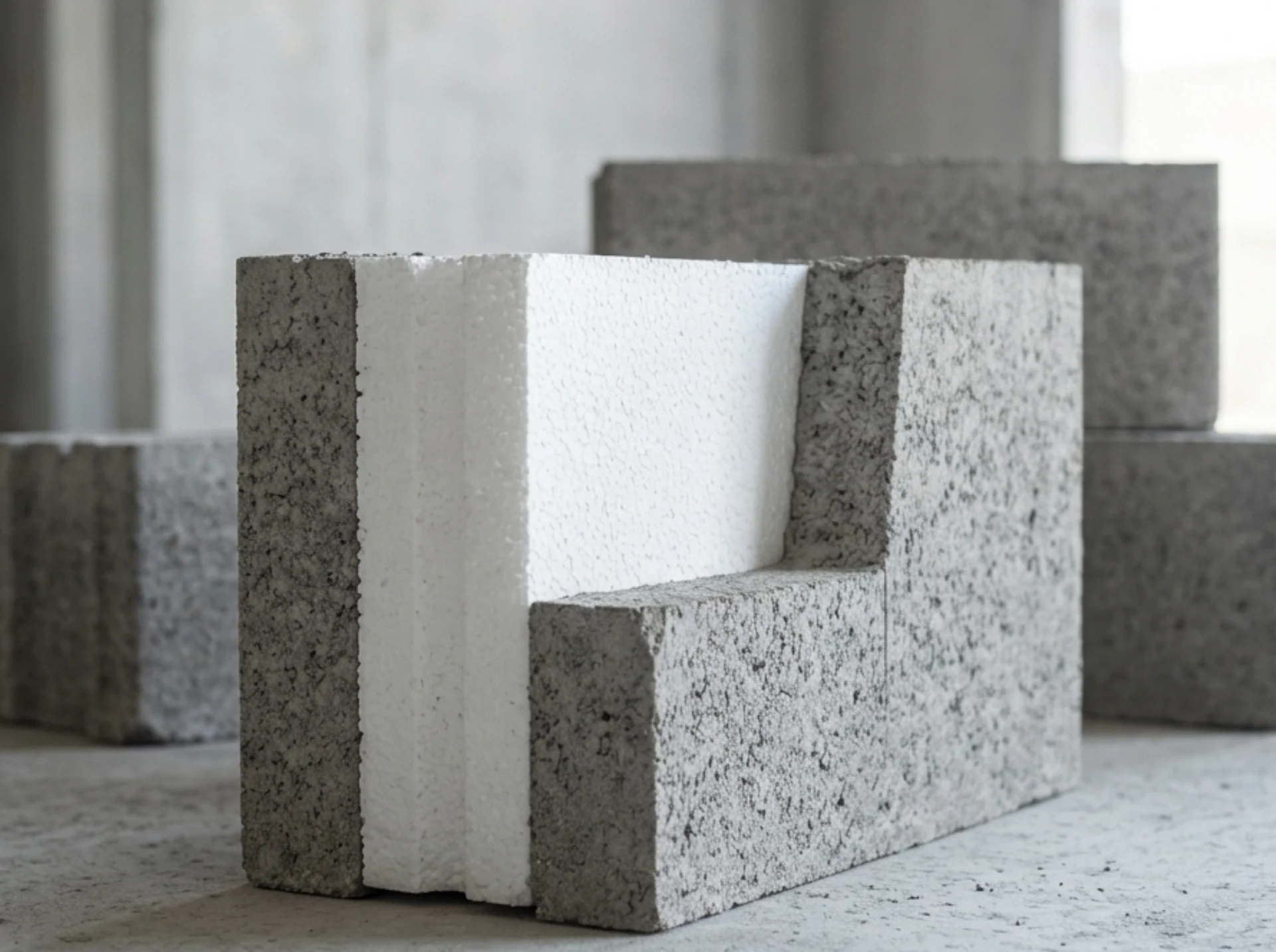
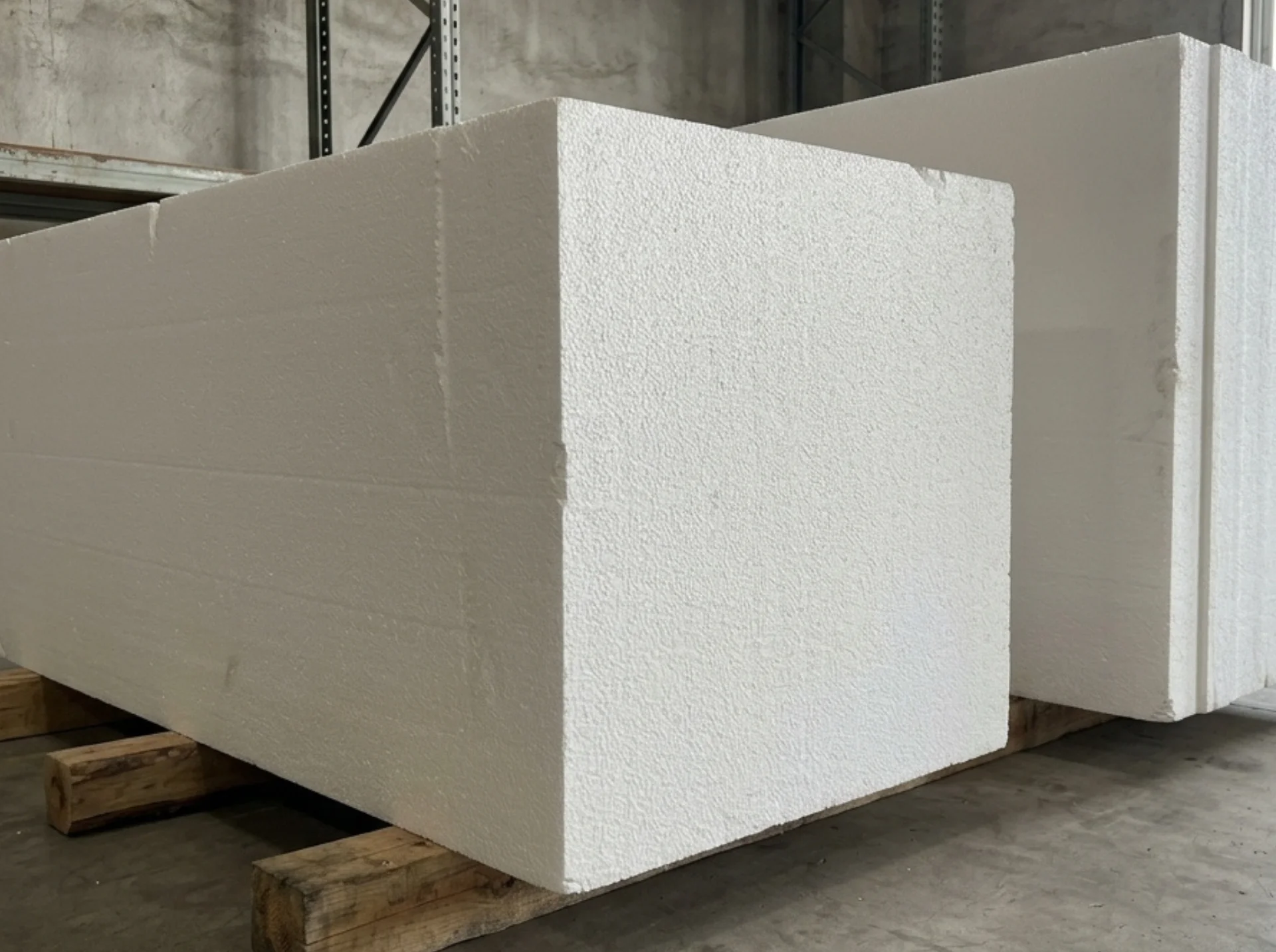
A thermal block is a precast concrete block manufactured with a core of Expandable Polystyrene foam positioned symmetrically inside it. The polystyrene core is not just placed inside the block, it is integrally locked into the concrete structure during manufacturing, meaning the two materials bond as one unit rather than sitting as separate layers that could shift or separate over time.
The result is a single block that performs two jobs at once. The outer concrete faces carry the structural load of the wall, while the inner polystyrene core blocks heat transfer through the wall. Traditional solid concrete blocks only do the first job, which is why buildings made entirely from plain blockwork tend to absorb and hold heat throughout the day.
How Thermal Blocks Work in a Wall
The science behind a thermal block is straightforward. Concrete is a poor insulator on its own, it conducts heat efficiently, which is exactly the wrong property for a wall in a hot climate. Expandable Polystyrene, on the other hand, is one of the most effective and widely used insulation materials precisely because it resists heat transfer so well.
By locking a layer of Expandable Polystyrene symmetrically into the center of the block, the wall gets a built-in thermal break. Heat trying to move from the outside face of the wall to the inside has to pass through the polystyrene core, which slows that transfer down significantly compared to a solid concrete block of the same thickness. The symmetry of the design also matters structurally, it keeps the block balanced so it performs consistently whichever direction it faces in the wall.
Why This Matters for Karachi Construction
Karachi’s long, intense summers put constant pressure on buildings that were not designed with insulation in mind. Uninsulated concrete walls and roofs absorb heat throughout the day and release it slowly into interior spaces, which forces air conditioning systems to work harder and pushes electricity bills higher across residential, commercial, and industrial buildings.
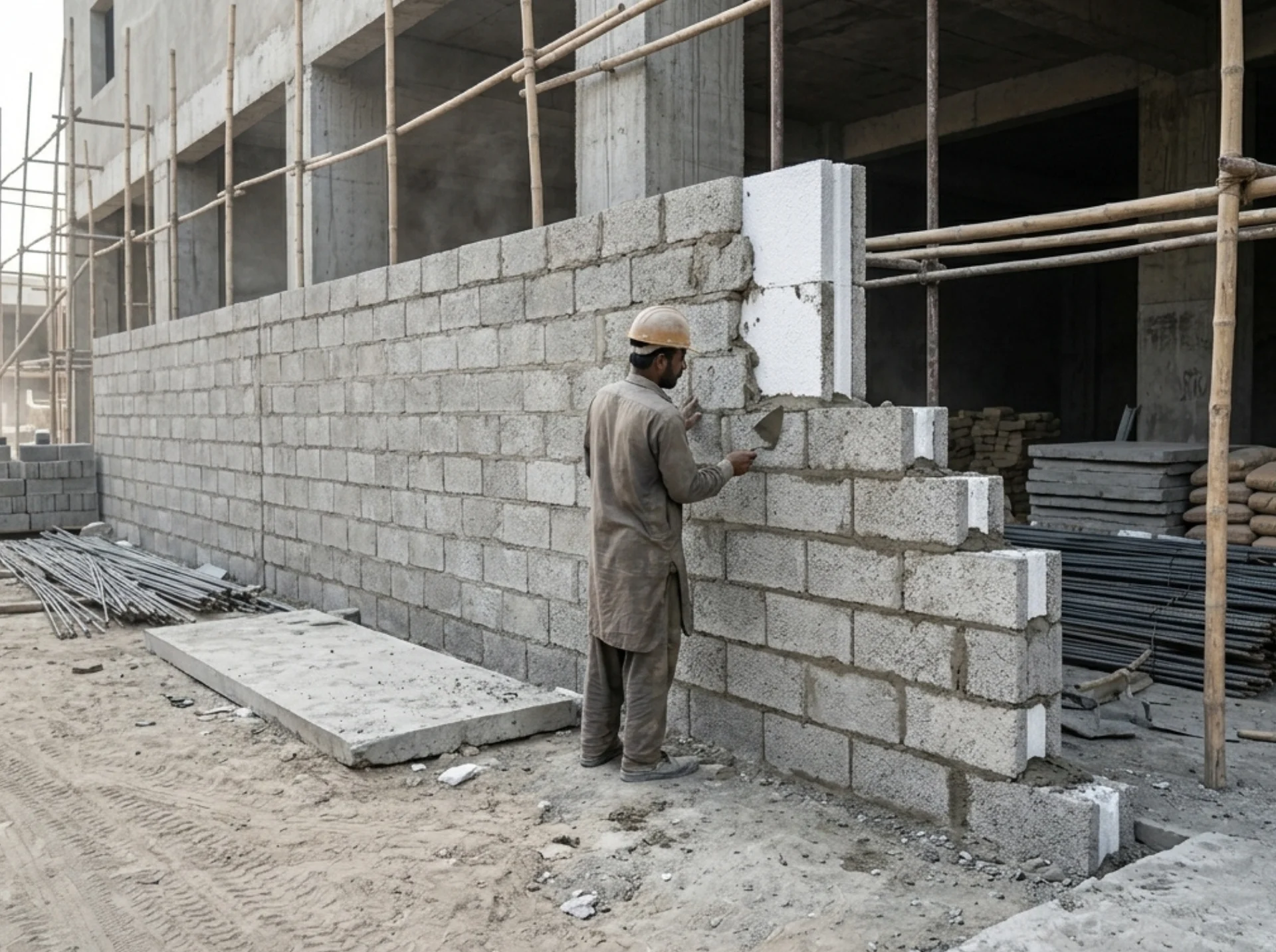
Thermal blocks address this at the wall level, not as an added-on layer but as part of the block itself. For new construction or major renovation projects in Karachi, using thermal blocks instead of plain concrete blocks can meaningfully reduce the cooling load on a building without changing the construction process much, since thermal blocks are laid and mortared in largely the same way as standard concrete blocks.
This is particularly relevant for:
- Residential buildings looking to cut long term electricity costs
- Warehouses and factories where large wall surface areas amplify heat gain
- Cold storage and pharmaceutical facilities where consistent internal temperature is critical
- Commercial buildings where cooling costs are a major recurring operating expense
Applications of Thermal Blocks
Thermal blocks are suited to any structure where wall insulation adds real value, which in a city like Karachi is a longer list than it might first appear:
- New residential construction where energy efficiency is a design priority
- Factory and warehouse walls, especially where large uninsulated surfaces currently drive up cooling costs
- Cold storage facilities that need to maintain lower internal temperatures with less strain on refrigeration systems
- Commercial buildings and offices looking to reduce long term utility expenses
- Boundary and partition walls in climate sensitive facilities such as pharmaceutical or food storage sites
Choosing a Thermal Block Manufacturer in Karachi
Not every thermal block is manufactured to the same standard. The quality of the bond between the concrete and the Expandable Polystyrene core, the density and consistency of the polystyrene itself, and the precision of how the core is centered inside the block all affect how well the finished wall performs.
Working with a manufacturer that produces both the Expandable Polystyrene core material and the finished thermal block gives better control over that consistency, since the insulation core is not sourced separately from a third party. International Thermosole Packaging manufactures Expandable Polystyrene products directly in Karachi and can walk through thermal block specifications based on your project’s structural and insulation requirements.
Frequently Asked Questions
Is a thermal block as strong as a regular concrete block?
Yes. Thermal blocks are engineered to carry comparable structural loads to standard concrete blocks. The Expandable Polystyrene core is positioned to add insulation without compromising the load bearing capacity of the block.
Do thermal blocks cost more than regular concrete blocks?
Thermal blocks typically cost more upfront than plain concrete blocks because of the added manufacturing step. That difference is generally offset over time through lower cooling costs, particularly in a hot climate like Karachi where air conditioning is a major ongoing expense.
Can thermal blocks be used for load bearing walls?
Yes, thermal blocks are designed to function as structural building blocks, not just as an insulation add-on. They can be used in load bearing applications the same way standard concrete blocks are.
How is a thermal block different from adding thermocol sheet insulation separately?
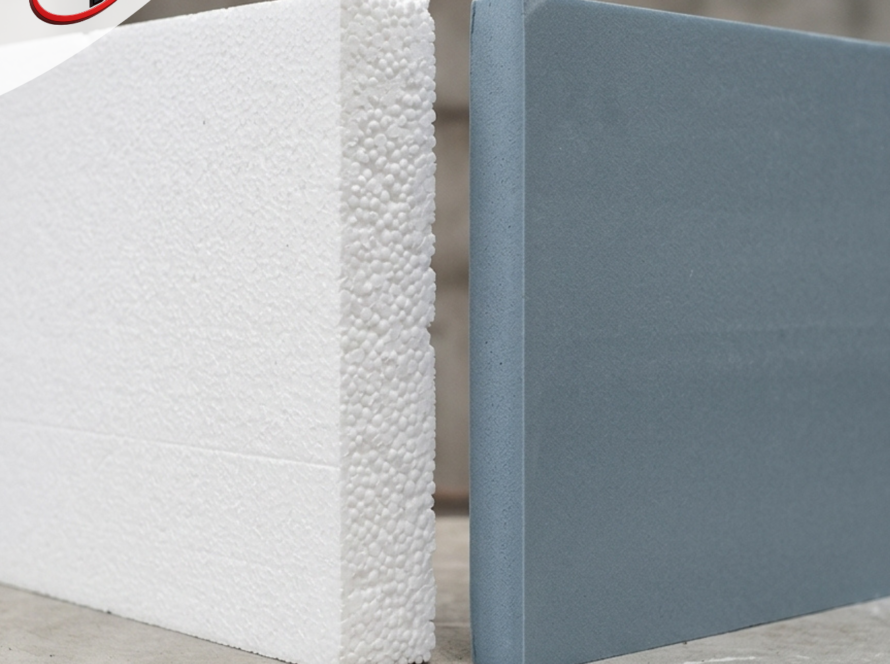
A thermocol sheet is typically installed as a separate insulation layer, often under a roof or against a wall surface. A thermal block integrates that same Expandable Polystyrene insulation directly into the block during manufacturing, so the wall is insulated as it is built rather than insulated afterward as an additional step.
Where can thermal blocks be manufactured or sourced in Karachi?
International Thermosole Packaging manufactures Expandable Polystyrene materials in Karachi and can provide guidance on thermal block specifications for residential, commercial, and industrial construction projects. Get in touch for a factory quote based on your project requirements.

1 Comment